1/30/2022 Picture & Chapter Book Round-Up: Rainbows, Rhymes, Catfish & Couture
- Sasha Wallace

- Jan 30, 2022
- 9 min read

Wow. One whole month of First Look Books. A faraway dream that became a New Year’s resolution – a New Year’s resolution that is now a weekly reality. It is not lost on me how lucky I am. These past 30 days have truly tessellated my life. I couldn’t ask for anything better than being allowed to share & create, to retreat to my literary safe haven & invite others into my castle of pages.
As if to mark the occasion, my husband & I found ourselves at a new library yesterday, the big one that just opened in Winter Park & looks like something Frank Lloyd Wright would’ve designed. There we were, stealing some warmth among the shelves upon shelves of Newbery medalists & Sunshine State selections, & I felt this scalding felicity. This is my life. I get to hang out in these stories in my free time. I feel as privileged as Macaulay Culkin in The Pagemaster.
It’s been a whirlwind & a constant, regardless of how contradictory that sounds, & I’m so grateful you joined me on this strange & bookish journey. To commemorate, let’s focus on 4 solid gold oldies featuring rainbows, rhymes, catfish & couture.
Picture Book 1 (old story, newish illustrations)
Title: Custard the Dragon and the Wicked Knight
Author: Ogden Nash
Illustrator: Lynn Munsinger
Recommended for: Grades 3-5
Basic plot: Can the world’s most cowardly dragon muster up his courage to save his best friend, Belinda, from the mischievous Sir Garagoyle? Warning: Many rhymes were injured in the making of this book.
Why I love it: Custard, true to his namesake, is a gutless weakling who, despite his size, is probably scared of his own shadow. Though many illustrators, including the acclaimed Quentin Blake of Roald Dahl fame, have put their own spin on Custard over the years, my favorite is Munsinger, who makes Custard’s timidity evident in the minutest details – facial expressions, body postures, flaccid wings & claws over eyes.
This isn’t the first Custard book Munsinger has tackled, but it is my favorite, if only for the extreme liberties Nash took with stretching his word symmetry. He rhymes ‘edelweiss’ with ‘solid ice’, ‘gorilla’ with ‘armadilla’, & ‘Belinda’ with ‘cinder’, to name a few. It’s so preposterous, it’s actually funny. I dare you to read this without chuckling. Go ahead. Try.
Nash was lauded for his skill with limericks & light verse, but the wordsmith had no qualms about making up words if he needed to complete a rhyming couplet. To me, that resonates with the comedic genius of Shakespeare & Lear.
What does this mean for you? Your kid is going to have a blast tackling the tongue-twisters & anything-goes terrain of each stanza. Rhyme is a scaffold, so once they establish the cadence, they will be able to self-correct for syllables & pronunciation, with minimal guidance. It doesn’t hurt that there’s a cute little dog named Mustard!
If you want more, below is the book I frequently borrowed from my Dad while growing up (though some poems are geared more towards an adult audience, so comb through before handing it off. And no, that’s not Pat Sajak in the middle):

The biggest benefit? Your kid will learn the word “thrice” without even having to watch Schitt’s Creek. If that doesn’t sell you, nothing will.

Where can you find it? Amazon, eBay, AbeBooks, Thriftbooks (cheapest $2.07 & up, used).
Extension activity: Have your kiddo write their own limerick! Teach them the form, show them famous examples (even SpongeBob has a few), then let their imagination take over! Here’s a nifty limerick generator if they are stumped: https://www.poem-generator.org.uk/limerick/

It’s also a good time to cover Edward Lear’s absurd limerick “The Owl & The Pussycat”, or even Lewis Carroll’s strange poem “The Jabberwocky” (both of which can be found in their entirety on the Poetry Foundation website for free). YouTube has a great narration of Carroll’s poem, done by Johnny Depp, that really brings out the ominous tone of the piece.

Carroll loved to employ portmanteaus in his work (two words morphed into one with a new meaning). Your child will have fun identifying them, breaking them down into their original parts & coming up with their own.
Portmanteaus have become part of our daily lexicon. Pokémon, bromance, frenemy, emoticon, chocoholic – they're ubiquitous.
Even just drawing their own version of the Jabberwocky based on cues & imagery may prove fun.


Picture Book 2 (something from my birth year)
Title: The Rainbow Fish
Author & Illustrator: Marcus Pfister
Recommended for: Grades K-3 (if ad to)
Basic plot: Deep in the ocean, there lives the most beautiful fish in the world. His scales sparkle like fireworks. But because of his pride, he’s all alone. Can he overcome his I’m-better-than-you attitude to make some friends?
Why I love it: This was one of the first books to use simple glittery paper to transform a character. It revolutionized illustrations despite the design itself being incredibly simple. It was & still is wildly popular, cementing itself alongside Where the Wild Things Are, Chicka Chicka Boom Boom & The Very Hungry Caterpillar as one of the staples of childhood reading. You know how gold leaf is on everything these days? That signature rainbow fish scale was the gold leaf of my youth.
Despite the author being Swiss, it has become deeply rooted in children’s book Americana & is usually part of the kinder-grade curriculum in public schools. In the 90s, this dominated Borders & Waldenbooks – you couldn’t turn a corner without seeing a Rainbow Fish board book, stuffed animal, puppet, sticker set, etc. Though it became a series, I much prefer the author’s other book – Dazzle the Dinosaur – to the later sequels, since it proved he could use the same trick in vastly different cosmos to similar effect.

Beyond the visually pleasing pictorial elements, the story itself is something many kids can relate to – superiority that must be humbled, negotiations & concessions that must be made to have friendships.
This is not a book about why you can’t have nice things. This is a book about why sharing them makes the world a better place to live in. That moral resonates deeply, though it isn’t terribly original (Dr. Seuss’ repertoire is rife with hoarders who turn their noses up at others, but eventually reform their miserliness).
Where can you find it? Amazon, eBay, AbeBooks, Thriftbooks, OverDrive in German (cheapest $0.69 & up, used). Any reputable Barnes & Noble store would have this in stock.
Extension activity: There’s every snack & craft from here to Betty Crocker for this book. This link is a good place to start, unless, like me, you’re content with just giving the kiddo some goldfish crackers & calling it a day: https://www.myjoyfilledlife.com/the-rainbow-fish/
Beyond crafts, I recommend a simple activity that may prove insightful & moving. After reading, ask your kiddo to go into their room & identify their “scales”. The “scales” are things they have that would bring others joy. Things they no longer need or use. It could be a coat for a classmate in need or a toy for the neighbors next door with the new baby. It could be a book or a candy that a younger sibling has been coveting. Teach them how it feels to give & share, have them record their thoughts in a journal or on a piece of paper & make it a regular occurrence. Perhaps reward them with a book after a few weeks of solid charity.
It would also be noteworthy if you yourself modeled this behavior, downsizing items from your own closet, jewelry box, pantry, etc. More power to you if you can find a way to have them be on the receiving end, so they can write about how each perspective felt.


Chapter Book 1 (famous author, lesser known book)
Title: The Secret River
Author: Marjorie Kinnan Rawlings
Illustrator: Leonard Weisgard
Recommended for: Grades 3-4
Basic plot: Hard times have come to the forest. When Calpurnia’s father no longer has fish to sell, she & her dog, Buggy-horse, strike out on their own to find a solution.
Why I love it: The pages are purposely stained brown, first off. It’s so unexpected & different, it’s absolutely mesmerizing. Beyond that, what’s not to like? Forest adventures, save-the-day heroines, faithful hounds, nature magic, wildlife poems, polite shadows, full moons, birdsong & whimsy. Everything Calpurnia does is executed with forethought & grace, for a noble cause, with utmost patience & impeccable manners.
I loved Rawlings’ The Yearling, but this right here? This is a short, coffee-paged time machine to Old Florida, a time of whooping cranes & cypress knees, where large swathes of the state still resembled a Highwaymen painting & things like milkmen & soda fountains still existed.
Know what else it is? An artifact of the Civil Rights Era. Published after Rawlings' death, it won a Newbery Honor award for its depiction of magical realism blended with Great Depression struggles. Those dark pages are radical & intentional. Rawlings died before stipulating Calpurnia's race & the publisher, Scribner, decided to use the opportunity to make a political statement against bigoted school boards. There was a deep & abiding taboo of portraying black characters in children's literature. So, to make sure black children could see themselves reflected in the protagonist, they conspired to dye the pages to suggest Calpurnia's race. It was a subtle clapback to the color barrier & a massive risk, considering what Scribner stood to lose if they got dropped from their biggest patrons. Keep in mind, 1955 was the same year Rosa Parks refused to give up her seat.

Who didn’t want to be a little girl with a loyal dog, paddling her own boat to find a secret river full of perch & bream? It’s unusual for children to rescue their fathers. More unusual still for them to do so without supervision. Nowadays, it’s pretty frowned upon for you to even let your little ones out of your sight to play hockey in the street or gambol across the monkey bars. That adds a long-ago flavor to this book that is only compounded by the lack of rivers in close proximity. Thanks a lot, incessant Florida developers! >:[
There’s a more recent version of this book out now, illustrated by Leo & Diane Dillon, which is wonderful in its own right. BUT! If you don’t mind paying extra, I promise Weisgard’s drawings are better. There’s gravitas & atmosphere in his work that just isn’t seen anymore. Weisgard was a Caldecott winner more known for his collaboration with Margaret Wise Brown in The Little Island, but you know why else I love him? 2 reasons – the first, he painted a kingdom of animals on his son’s bedroom wall which cured the boy’s insomnia; the second? He launched Maurice Sendak’s career.

Where can you find it? eBay, AbeBooks, antiquarian shops (cheapest $15.99 plus shipping & up, used. Ballpark, you’ll pay anywhere from $30-$45 for a clean copy).
Extension activity: This one is pretty straightforward. Go canoeing or kayaking. Try to choose a place that isn’t crowded or high-traffic. If you’re in Florida, I suggest Rainbow Springs State Park or Crystal River, early in the morning. Spend time going downstream, making note of the wildlife seen & sounds heard, the coolness of the year-round 72 degree water on your fingertips, the J-stroke of your oars, the wind feathering the tops of the trees. Absolutely no tech allowed – really try to immerse yourself in the wilderness.

If time allows, go fishing, or have an authentic fish fry that night (I suggest mullet), teaching your kiddo how to egg, flour & fry each fillet. Then, ask them to reflect – what was the secret river symbolic of? Are there any secret rivers in their own life? If there were, would they tell anyone about it? Why or why not?
Lastly, seek affirmation & power. Have your kiddo brainstorm a list of books with characters that look like them. Ask them to jot down how representation makes them feel. Respond to this prompt - Why is it important for children to see figures that resemble them in books & film? What are the effects of this?


Picture Book 3 (something whimsical)
Title: Jennie’s Hat
Author & Illustrator: Ezra Jack Keats
Recommended for: Grades 1-2
Basic plot: Jennie is upset when her new hat is plain. Thankfully, she has some bird friends to help her add pizzazz.
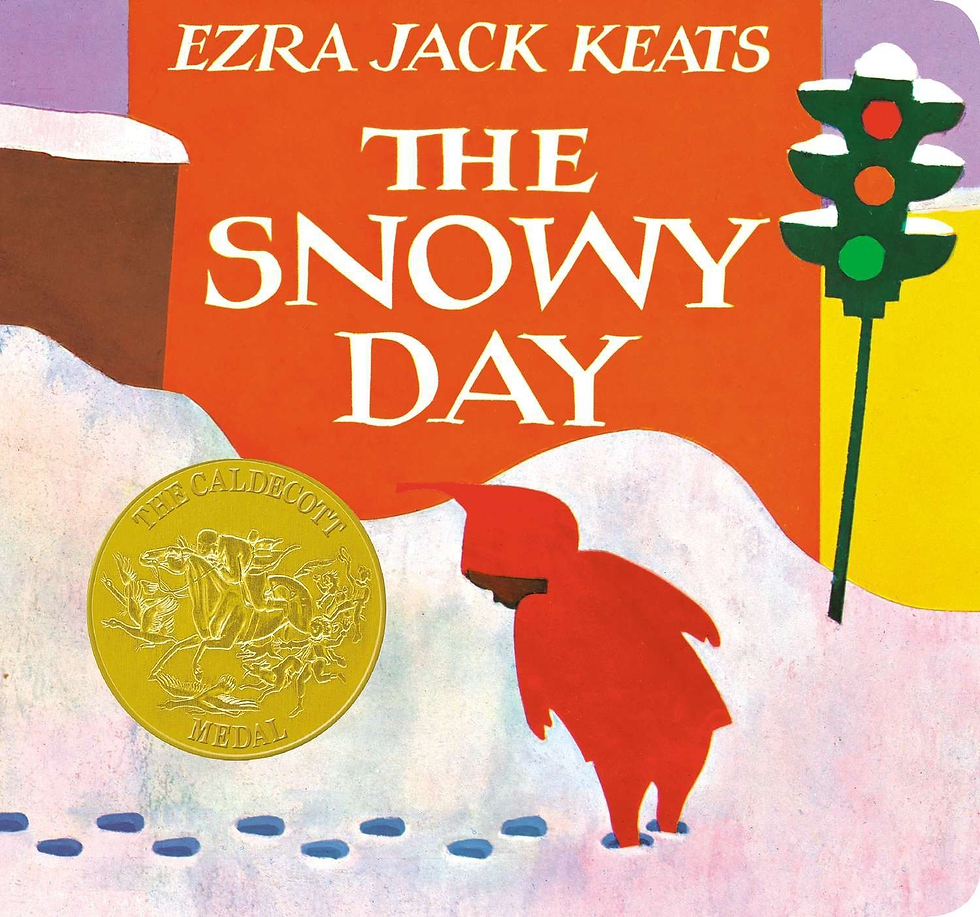
Why I love it: Ezra Jack Keats is famous for The Snowy Day, the first Caldecott book EVER to feature a black protagonist. Keats proved to be more than a one-hit wonder when, 4 years later, he fashioned Jennie’s story out of bits of calico & paisley endpapers. It looks worlds different than the austere graphics of TSD, indicative of Keats trying to experiment & push his artistic limits. It is wildly avant-garde, reminiscent of Snow White & Mary Poppins all at once. Though Jennie initially comes across as spoiled (she isn’t thankful for the hat she receives), my opinion of her changes after we witness her kinship with the birds she feeds. She comes to realize that a plain hat is a wonderful gift, as it is a blank slate to foist ideas upon. This redeems her & makes her more likable to the reader, who learns not to look a gift horse in the mouth. Plus, the art is tastefully imprecise, reminiscent of Bemelmans' Madeline.
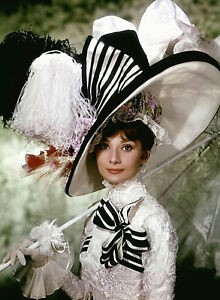
The pictures remind me of the hats women used to wear to derbies & polo matches. They tower above an acceptable height, adorned with all sorts of pretty ribbons & scraps of lace. Is it any wonder my twin sister’s goal in Pre-K was to wear a fancy hat & go to dinner? You can’t help but feel hoity-toity & boss with these trilbies atop your head. Almost makes you empathize with Indiana Jones.


Where can you find it? Amazon, eBay, AbeBooks, Thriftbooks, OverDrive (cheapest $1.00 & up, used).

Extension activity: Obviously, one must make their own! I recommend using newspaper as the base & tucking lots of Dollar Tree flowers into the brim.


Thanks for tuning in! Keep the pages turning until we meet again.
Love,
Sash
*The photograph at the top of this post is entitled “Rainbow Over the Potala Palace” by Galen Rowell*


Comments