5/22/2022 Chapter Book Spotlight: The Lion’s Paw


I vividly remember my fourth grade teacher, Mrs. Hough, reading to us in the late afternoon. The best was when there was a storm outside, making it dark in the classroom. She’d turn on a lamp, sit in her rocking chair, & wait for us to get out our snacks. Then, as we munched on milk & cookies or Teddy Grahams, we’d curl up on the carpet in our assigned spots & we’d listen to her do about a chapter a day.
Most of the time, it was Sunshine State books – The Spy Who Came In From the Sea, Deadly Waters, Because of Winn-Dixie, even the Silverwing series by Kenneth Oppel about the misadventures of bats.
But sometimes, she’d take a classic from her arsenal that we’d never heard of. Something not advertised at the Scholastic Book Fair or on display at the media center. We’d get so wrapped up in the story that we’d beg her to continue. Occasionally, she’d relent & we’d skip recess to keep going. Sometimes, she’d tantalize us with cliffhangers & putting off a new page until the next day. But always, she instilled in us a love of listening.
In fifth grade, my teacher, Mrs. Pandolph, built on this foundation by putting us into reading groups, where we read A Wrinkle in Time & Misty of Chincoteague, among others. The difference? This time around, instead of being read to, Mrs. Pandolph challenged us to do the reading. The first time I read a substantial selection aloud to someone other than my parents – not a line, but an entire page – I felt like I was jumping off a mountain. I was so nervous. What if I flubbed it? What if I didn’t know a word & just froze there & everyone laughed? What if the other kids in the reading group were flawless & I was so terrible I would get demoted to a lower Lexile group?

But the way Mrs. Pandolph encouraged me & gave me this beautiful smile after I finished made me realize how powerful I was. I didn’t have to wait for someone to read to me anymore. I could pick up a book, turn to any page, & do it myself. That was a high I rode all that year. Even when she would gently correct a mispronounced word or stop me to make sure I understood what I read & wasn’t just phonetically saying things like ABBA, I felt like a conqueror. She taught me that the reading journey was more important than the reading finish line. I slowed down, learned to savor, learned to predict, prevented myself from skimming or flipping to the end. Self-control. Do you even understand how rare it is, to teach a ten-year-old to read for pleasure?
In our groups, we’d take turns reading aloud while Mrs. Pandolph kept track of our automaticity, prosody, etc. She occasionally had us act out things we’d read. I remember with fondness the reader's theaters she had us undertake.
To this day, I owe much to these incredible educators. Not only did they make me love reading, but they also are the reason I read to my own students today & am known for getting even the wiliest 8th graders to beg for a part in our Shakespeare productions or Twilight Zone scripts. I remember how they’d push my friends & I past our Lexile by selecting interesting texts, how they’d ask probing questions to make sure we comprehended the material, how they’d encourage us if we stumbled on the vocabulary & helped us break down words for roots, prefixes & suffixes.

A magician never reveals his tricks. Perhaps this is the reason I’ve not contacted Mrs. Hough or Mrs. Pandolph to request their assistance in magic-ifying my own classroom. My first year of teaching, I was sorely tempted. I wondered if maybe I’d put them both on a pedestal & that I just imagined how spellbound & well-behaved every student was when it was reading time. For me, it’s difficult to do reading time with constant interruptions from intercoms, ringing phones, kids trying to skip, kids fidgeting, the pull of cellphones (parents, for the love of God, PLEASE stop texting your kid when you know they are in class!!!!!), laptops, etc. Plus, my class demographic makes things difficult. When you have students who speak other languages & the text you selected doesn’t have an accompanying translation, when you have students who are off their medication & are having a tough time focusing & being present with you, when you have oppositional defiant students who refuse to participate, it can be hard to make reading time successful & inclusive for everyone. I make a valiant effort, but I’ve only ever achieved 100% participation a handful of times despite my exertions.
I decided to see if I was the only one who remembered reading time in that sort of nostalgic light where everything becomes perfected in memory & loses the sharpness of reality with age. I contacted several of my classmates from both grades, talked with them extensively…& it was confirmed – reading time was a highlight, a favorite daily moment that was revered & cherished across the board. It wasn’t a fluke in the matrix. Both teachers were regarded as master storytellers & pickers, exceptionally keen-minded individuals who knew just how to select a plot that would enthrall their scholars.
That right there is the magic. In studying the successes of Mrs. Hough & Mrs. Pandolph, I’ve realized that the key to a successful reading experience is in the text itself – it has to be something interesting, with the prerequisite dashes of mystery, adventure, & humor. If it is too dry, too scary, too romantic, too verbose – you’ll lose ’em. You absolutely have to read it first, examine your own responses to it, & ask yourself how it would feel if someone read it aloud to you. Can it stand on its own against the magnetism of modern technology? Does it have enough pull to de-stress a room of people? Do you think about it long after you know the outcome? In the best scenarios, a good book or short story can turn a ragtag group of students into a temporary family, much like the cast of a play or musical.
I think it’s only right that today’s selection is a chapter book that Mrs. Hough read to us that I’ve never forgotten. It’s recently been re-issued & is much sought-after. Hunker down for a slice of Old Florida, Gilligan’s Island-style.

Chapter Book 1
Title: The Lion’s Paw
Author: Robb White
Illustrator: Ralph Ray
Recommended for: Grades 4-6
Basic plot: Being an orphan is hard enough. But when her younger brother, Nick, gets adopted & she’s left at the orphanage, 12-year-old Penny’s had the final straw. Making their escape is the easy part. The obstacles arise when the duo befriend Ben, a 15-year-old sailboat owner, & decide to set out on the ocean for the quest of a lifetime.
Why I love it: This book is about running away. Plain & simple. When life deals you lemons, & you’re tired of making lemonade, sometimes you just have to pick up & pursue different opportunities. There’s a romance to the sea, a sort of test-your-own-meddle sensation that every kid I knew wanted to experience at least once in their lives. Stealing a sailboat, searching for Ben’s M.I.A. father, being chased by cutthroats & the Coast Guard, defying alligators & inclement weather…it’s a gorgeous story about family, friendship, grit & resourcefulness. The description of the Florida coastline, the intricate pencil illustrations, the familiar settings – Lake Okeechobee, the St. Lucie canal, Captiva Island – all of these meld to create an unforgettable reading experience. The thrill of adventure, the clandestine sneaking around in the dead of night, the way the stowaways push themselves to their limits to achieve a common goal, the absolute dedication they give to their mission – it is impossible to dislike this book. It’s like a cross between The Goonies & Stormy Weather, PG-rated. Part travelogue, all heart, it continues to move me even as I approach 30.
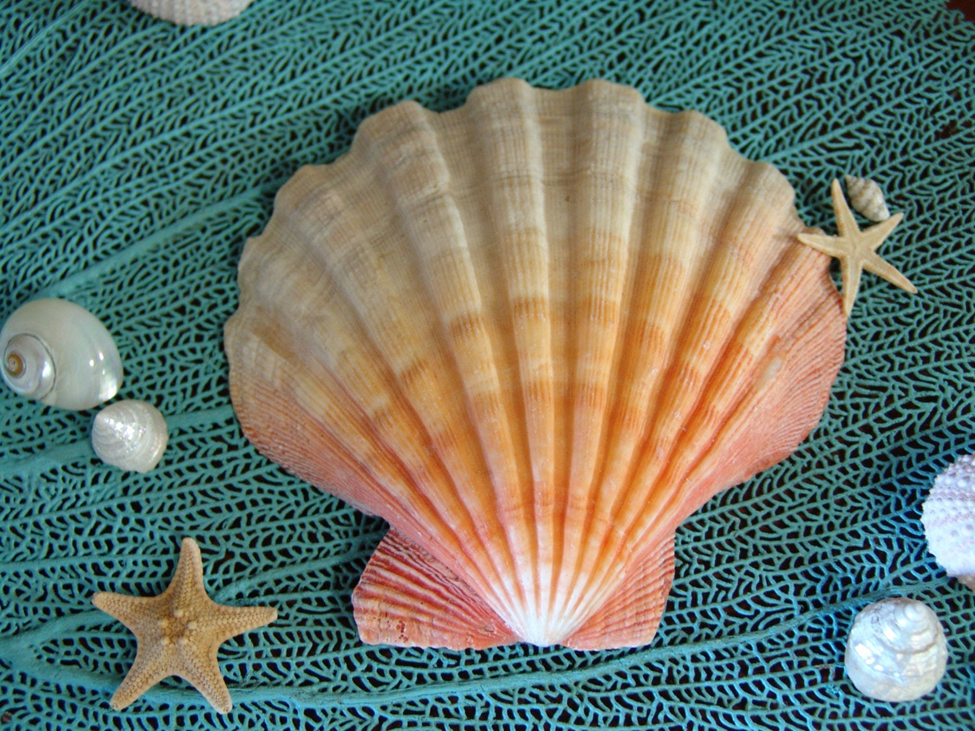
I wanted to read it to my own students several years back, but was encouraged not to. At the time, two teenagers in Tequesta had vanished after taking a boat out in a storm in Jupiter Inlet. They were never found. I realized that Penny, Nick & Ben’s adventure wouldn’t be possible today. The way parenting has changed, the way society has changed, the way laws have tightened & social media has emerged to pass judgment, prevents kids from such explorations. Even my own father loves to tell stories of his youthful hitchhiking or treks from Canada to Minnesota – but he would never countenance such an experience for his own children, nor do I blame him. I don’t know if it is because the world is more dangerous now or that we just know about the danger better & more quickly than we did before. I know the weather hasn’t changed. I know the beauty of the Florida coastline, minus erosion (& way too much development), hasn’t changed. I know the lion’s paw seashell, a ridged, orange, clam-shaped beauty, hasn’t changed. Maybe that’s why I love this book so much – because something like it will probably never happen again. Those carefree days are gone & surveillance has replaced them.
Is it a bad thing? How can I possibly say? I grew up on the cusp of both worlds. I know I wouldn’t let my kiddo sail alone on the open sea. But I absolutely want them to live vicariously, safely, through the experiences of the children who did.
Whatever you do, read it aloud. Do a chapter a day. Make them beg for more. You won’t regret it.
Where can you find it? Amazon, eBay, AbeBooks, Thriftbooks (cheapest $13.03 & up, used).
Extension activity: Make a map of all of the places mentioned in the book. If you’re local, feel free to visit them & journal about the experiences. I recommend setting the mood with a “book tasting” – whip up some old recipes either from Marjorie Kinnan Rawlings’ Cross Creek cookbook or elect for a standard fish fry. Then, rummage through these vintage Florida postcards to get a feel for the way things looked in the 1940s, when this was written.
I also encourage you to go sailing together. Check Groupon, find a voucher, & consider making a family day of it. Even just a beach trip where you look for seashells together & give a prize to whoever can find a lion’s paw is a free & easy activity that helps extend one’s reading to real world applicability.
If you are reading to middle schoolers, have them make a soundtrack or playlist of songs they think Penny, Ben & Nick would listen to as they travel. They can also do research about the finding stats for M.I.A. naval officers during WWII.
Orphans are common in the world of children’s literature. Whether it’s Annie singing about tomorrows or a titular Charles Dickens character down on his luck, the lack of parental figures is a plot tool that helps the young protagonist embark on journeys they would otherwise be cautioned against undertaking. One possible project would be to research other famous orphans in popular books & examine how the entire trajectory of the story would change if they had a role model or guardian to consult. Comparisons can be made to:

· Anne Shirley
· Batman
· Cinderella
· Frodo Baggins
· Harry Potter
· Heidi
· Hercules
· Lyra (His Dark Materials series)
· Mowgli
· Oliver Twist
· Peter Pan
· Quasimodo
· Spiderman
· Tarzan
· The Baudelaire children (A Series of Unfortunate Events)
· Tom Sawyer
Thanks for tuning in! Keep the pages turning until we meet again.
Love,
Sash


Comments